Filing for bankruptcy can provide debt relief and a fresh start, but when you're judgment proof or have minimal dischargeable debt, doing nothing or pursuing alternatives could be the better strategy.
Updated 12/04/2025
Why Trust Us?
Fact-Checked
Nolo was born in 1971 as a publisher of self-help legal books. Guided by the motto “law for all,” our attorney authors and editors have been explaining the law to everyday people ever since. Learn more about our history and our editorial standards.
Each article that we publish has been written or reviewed by one of our editors, who together have over 100 years of experience practicing law. We strive to keep our information current as laws change. Learn more about our editorial standards.
Bankruptcy provides many people who are struggling with debt with a fresh start. However, deciding whether to file for bankruptcy or do nothing requires analyzing several factors. In some situations, doing nothing—at least temporarily—might be your best strategy, particularly if you're "judgment proof" and creditors can't legally collect from you.
Learn why you'll want to look at whether creditors can take your assets, whether bankruptcy will erase most of your debt, and whether you can protect important property before making your decision. As well, find out what alternatives exist.
In This Article
- When Should You File for Bankruptcy? Key Warning Signs
- How Does Bankruptcy Work? Understanding Chapter 7 and Chapter 13
- Consequences of Doing Nothing and Not Paying Debts
- Factors to Consider When Deciding Whether to File
- What Debts Can Bankruptcy Eliminate? Dischargeable vs. Nondischargeable Debts
- What Property Can You Keep in Bankruptcy?
- Bankruptcy Alternatives: Other Options Before Filing
- FAQs About Bankruptcy vs. Doing Nothing
- Need More Help?
When Should You File for Bankruptcy? Key Warning Signs
Most people consider filing for bankruptcy after their debts have been unmanageable for some time, searching out help when they run into a significant problem. All of these are classic signs that it's time to take action:
- You're facing creditor harassment.
- You can't afford your monthly bills.
- You're paying for food and other basics using credit cards.
- You've received notice of a wage garnishment, foreclosure, eviction, or lawsuit.
Tip. If you're facing a deadline, such as a home sale or car repossession, you'll want to move quickly and consider filing an emergency bankruptcy.
How Does Bankruptcy Work? Understanding Chapter 7 and Chapter 13
Bankruptcy works by erasing qualifying debts, and most people file for one of two types: Chapter 7 or Chapter 13.
Chapter 7 is known as a "liquidation" bankruptcy because property is sold for the benefit of creditors (although you can keep the things you need to maintain a home and job). Chapter 7 takes a few months to complete and is the most frequently used process. But not everyone qualifies. Your income must be low enough to pass the Chapter 7 means test.
Chapter 13 is often called a "reorganization" bankruptcy because you pay creditors through a three- to five-year plan. You keep all property in a Chapter 13 case. To qualify for Chapter 13, you must earn enough to pay the required Chapter 13 plan.
Key Benefits of Filing for Bankruptcy
Filing for bankruptcy provides you with a fresh financial start by:
- providing immediate protection from creditors through the automatic stay
- stopping wage garnishments, foreclosures, lawsuits, and evictions (at least temporarily), and
- eliminates qualifying debts, like credit card balances, medical bills, and more.
Potential Drawbacks and Costs of Bankruptcy
Bankruptcy comes with some negative aspects that you should be prepared for, including:
- costs of attorney and filing fees
- potential property loss in Chapter 7
- a public record of bankruptcy
- notation on credit reports for 7 to 10 years, and
- challenges renting housing, opening bank accounts, and getting credit.
While the initial costs and property loss are immediate, other effects fade over time.
Consequences of Doing Nothing and Not Paying Debts
If you don't take action, the creditor's collection efforts will escalate. You could find yourself being sued, having liens placed on your property, and having money taken from your bank account. The long-term implications include hits to your credit score and an inability to buy things you need on credit. Over time, the emotional strain can impact your mental health.
However, not everyone needs to file for bankruptcy. For instance, your financial setback is temporary, and you can manage with budget adjustments. Here are two other situations in which filing isn't necessary.
Understanding Judgment Proof Status: When Creditors Can't Collect
Being "judgment proof" means creditors can't get anything from you, no matter what they do. It wouldn't matter whether the creditor has a statutory right to collect from you (like the IRS) or if they sued you and won a court judgment. If you're judgment proof, your assets and income are protected by law, and you have nothing for creditors to take. (11 U.S.C. § 522.)
You're typically judgment proof if you meet these criteria:
- No real estate equity. You don't own property, or any equity you have is fully protected by your state's exemption statutes.
- No valuable assets. You don't own assets worth more than what your state's bankruptcy exemptions protect.
- Low or no income. You aren't working, have a very low-paying job, or your income falls below the garnishment threshold (typically $217.50 per week for most states as of 2025, but check your figures).
- Protected income sources. You receive Social Security benefits, Supplemental Security Income (SSI), unemployment benefits, or other public assistance that creditors can't garnish.
Tip. Judgment proof status can be temporary. Creditors often wait for your situation to improve for years before pursuing collections, because judgments can frequently be renewed. So consider your long-term financial prospects before relying on judgment-proof status. If you're currently unemployed but expect to return to work within 12 months, filing now while your income is low and you easily qualify would be a good strategy.
Example. Despite owing $50,000 in medical bills, Jennifer is fully protected from creditors because she works a minimum wage job with protected wages and owns no significant assets or real estate equity. However, even though she is judgment proof, she might choose to file to stop collection calls or if she anticipates a substantial future financial improvement.
When You Can Wait Out the Statute of Limitations
Each state sets time limits (statutes of limitations) for how long creditors can sue you to collect a debt, typically three to six years for credit card and medical debts. If you're judgment proof and the statute of limitations will expire soon, waiting might make sense.
Factors to Consider When Deciding Whether to File
When weighing and balancing your options, a few of the things to consider include:
- your total debt amount and types
- the property you own
- your current and future income potential
- your long-term financial goals, and
- the emotional and psychological impact of filing for bankruptcy (although most people express great relief after completing bankruptcy).
What Debts Can Bankruptcy Eliminate? Dischargeable vs. Nondischargeable Debts
Many people can eliminate their debts in Chapter 7 bankruptcy, including credit card balances, medical bills, and personal loans, and pay a minimal amount on the same in Chapter 13. However, not all debts disappear in bankruptcy. (11 U.S.C. § 523.)
The debts listed below, known as "nondischargeable debts," either can't be discharged or require special procedures for discharge. If your most worrisome bills aren't dischargeable in bankruptcy, filing might not help.
Can You Discharge Child Support in Bankruptcy? What You Need to Know
Chapter 7 bankruptcy will never eliminate child support or alimony arrears. Filing for Chapter 7 only helps if discharging other debts frees up enough income to pay your support obligations. (11 U.S.C. § 523(a)(5).)
Chapter 13 offers better options. You can stop collection actions by proposing a three- to five-year repayment plan that pays your child support arrearages in full, and avoid many negative consequences, like:
- wage garnishment (up to 50% to 65% of disposable earnings)
- federal or state income tax refund intercepts
- passport denial or revocation
- driver's license suspension (in 32 states), and
- contempt of court charges and potential jail time.
Example. Facing a 50% wage garnishment for $24,000 in child support arrears and owing $8,000 in credit card debt, Jon files for Chapter 13. It stops the garnishment, discharges the credit card debt, and allows the arrears to be paid off over 60 months. (11 U.S.C. § 1322(a)(2).)
Can Bankruptcy Eliminate Tax Debt? Rules for Discharging Back Taxes
Although bankruptcy won't eliminate recent income tax debts (generally those less than three years old), you can discharge older income tax debts in Chapter 7. Many people with newer tax debt choose to pay tax arrearages through Chapter 13 over 36 to 60 months. (11 U.S.C. § 523(a)(1).)
If you take no action regarding past-due income taxes, you could face:
- federal or state tax refund seizures (100% of refund)
- Social Security benefits reduction (up to 15% for federal taxes)
- wage garnishment
- property liens against your real estate, and
- bank account levies.
Can You Discharge Student Loans in Bankruptcy? Undue Hardship Explained
Discharging student loan debt in bankruptcy requires proving "undue hardship," a difficult but not impossible standard. Courts use different tests, but you generally must show that you cannot maintain a minimal standard of living while repaying the loans, your financial situation is likely to persist, and you've made good-faith efforts to repay. (11 U.S.C. § 523(a)(8).)
By contrast, if you do nothing and default on federal student loans (typically after 270 days of nonpayment), you could face:
- wage garnishment up to 15% of disposable earnings without a court order
- federal and state income tax refund offsets (100% of refund)
- loss of eligibility for additional federal student aid and Pell Grants
- loss of deferment, forbearance, and income-driven repayment options, and
- Social Security and disability benefits reduction (up to 15%).
Example. By filing Chapter 7 and eliminating $37,000 in credit card and medical debt, Sarah frees up $680 per month, making her income-driven repayment on $180,000 in student loan debt affordable.
Update on Federal Student Loans. Recent Department of Justice (DOJ) guidance has made discharging federal student loans significantly easier. Debtors can now use a form to utilize a process in which the DOJ reviews the case and recommends discharge or modified terms. It appears that the process has helped more people discharge their student loan debt overall.
What Property Can You Keep in Bankruptcy?
You'll check your state's bankruptcy exemptions to find out what your state will allow you to keep after filing for bankruptcy. You won't lose the basics, which often include household furnishings, clothing, a modest car, some home equity, and a retirement account (though not always, so verification is paramount).
You'll need to take extra steps to keep financed property, such as a house or car in bankruptcy, especially if you're behind on the payment. But even in those situations, bankruptcy can help.
Using Chapter 13 to Save Your Home or Car
If you're behind on mortgage or car loan payments, Chapter 13 bankruptcy allows you to catch up on those payments through your repayment plan. (11 U.S.C. § 1322(b)(5).)
You might also be able to:
- Eliminate second mortgages or home equity lines of credit through "lien stripping" if your home's value doesn't exceed your first mortgage balance.
- Reduce your car loan to the vehicle's current market value (if you've had the loan for at least 910 days).
- Spread arrears over 36 to 60 months while making regular ongoing payments.
Example. Henry is four months behind on his $2,100 monthly mortgage payment, owing $8,400 in arrears plus $1,200 in late fees and attorney fees (total: $9,600). His lender has filed for foreclosure. By filing Chapter 13, Henry can stop the foreclosure and pay the $9,600 arrears through his plan over 60 months at $160 per month, while continuing his regular $2,100 monthly mortgage payment outside the plan.
Learn more about your home in bankruptcy and keeping a car in Chapter 13.
Keeping Your Home or Car in Chapter 7
Chapter 7 bankruptcy doesn't allow you to catch up on past-due payments. However, if you can discharge enough other debt to free up money for your mortgage or car loan, Chapter 7 might be worthwhile.
To keep a financed home or car in Chapter 7, you must be current on secured loan payments when you file and continue making payments after bankruptcy. Learn more about how to prevent losing your home in Chapter 7 and keeping a car in Chapter 7. (11 U.S.C. § 521(a)(2).)
Bankruptcy Alternatives: Other Options Before Filing
For many, filing for bankruptcy is an option of last resort, and you'll want to consider other debt relief strategies first.
Payment Plans Directly With Creditors
Many creditors, especially medical providers and utility companies, will work out payment plans if you contact them before they send your account to collections. These arrangements don't require court involvement and won't appear on your credit report as negatively as bankruptcy.
Debt Counseling and Consolidation
This strategy combines multiple debts into a single payment, usually at a lower interest rate, streamlining and reducing your overall monthly debt payment. Often, only major credit cards are included in the plan, and the accounts are closed once it's completed, which can lead to a drop in credit score. Many people can improve their credit significantly faster by filing for bankruptcy.
Debt Settlement and Negotiation
If you have some money available (such as from a tax refund, bonus, or family help), you might negotiate with creditors.
- involves negotiating reduced balances with creditors
- most creditors require a lump-sum payment, and
- you might be required to demonstrate that you can't pay.
Tip. It's imperative to negotiate with all creditors fully before committing to payments. It's counterproductive to pay a few only to have the remaining refuse to settle and file for bankruptcy.
Example. Using a $7,000 inheritance, Tom negotiates to settle $22,000 in credit card debt by having three creditors agree to 40% of the balance, resolving all of his debt without filing for bankruptcy.
FAQs About Bankruptcy vs. Doing Nothing
- How long does bankruptcy stay on your credit report?
- Can creditors garnish Social Security benefits?
- How much does it cost to file for bankruptcy?
- What does judgment proof mean?
- Should I file for bankruptcy if I'm judgment proof?
- Can I keep my house and car if I file for bankruptcy?
How long does bankruptcy stay on your credit report?
Chapter 7 will stay on your credit report for up to 10 years, while Chapter 13 will remain for 7 years. The impact lessens over time as you rebuild your credit.
Can creditors garnish Social Security benefits?
Most creditors can't garnish Social Security benefits as long as they're maintained in a separate account and not comingled with other funds (otherwise, it's impossible to tell which funds are protected). However, the federal government can garnish up to 15% of your wages for overdue federal taxes or student loan debt. Child support and alimony can also be garnished from Social Security funds.
How much does it cost to file for bankruptcy?
The filing fee for Chapter 7 is $338, and for Chapter 13, it is $313. Attorney fees typically range from $1,000-$3,000 for Chapter 7 and $3,000-$6,000 for Chapter 13. The price varies depending on the complexity of your case and where you're located.
What does judgment proof mean?
Judgment proof means you have no income or assets that creditors can legally take, even if they sue you and win a judgment. This typically applies when your only income is from protected sources like Social Security, you have no real estate equity, and you own no valuable assets beyond what state exemption laws protect.
Should I file for bankruptcy if I'm judgment proof?
If your financial situation will improve, it's a good idea to file for bankruptcy and erase debt while it's easy to qualify and you don't have property you would lose. Some judgment-proof people also file to stop creditor harassment, although that can often be accomplished by not answering calls and asking creditors (in writing) to stop contacting you.
Can I keep my house and car if I file for bankruptcy?
In many cases, yes. Chapter 7 works well when you are caught up on payments and can afford to continue making them. Chapter 13 is a great way to go when you're behind on payments and need time to catch up.
Need More Help?
Did you know Nolo has made the law accessible for over fifty years? It's true, and we've written many articles on bankruptcy for people who need a fresh financial start. If you'd like more information:
- explore what bankruptcy can do for you
- discover the differences between Chapters 7 and 13
- learn what to avoid doing before bankruptcy, and
- if you learn better through examples, check out filing for bankruptcy.
For additional insight, take our 10-question bankruptcy quiz. It explains the fundamental aspects of bankruptcy while helping you identify issues best handled by a bankruptcy lawyer. If you're not sure that you can afford legal help, find out creative ways to finance a filing when you can't afford a bankruptcy lawyer.
In This Article
- When Should You File for Bankruptcy? Key Warning Signs
- How Does Bankruptcy Work? Understanding Chapter 7 and Chapter 13
- Consequences of Doing Nothing and Not Paying Debts
- Factors to Consider When Deciding Whether to File
- What Debts Can Bankruptcy Eliminate? Dischargeable vs. Nondischargeable Debts
- What Property Can You Keep in Bankruptcy?
- Bankruptcy Alternatives: Other Options Before Filing
- FAQs About Bankruptcy vs. Doing Nothing
- Need More Help?
DIY Legal Tools from Nolo
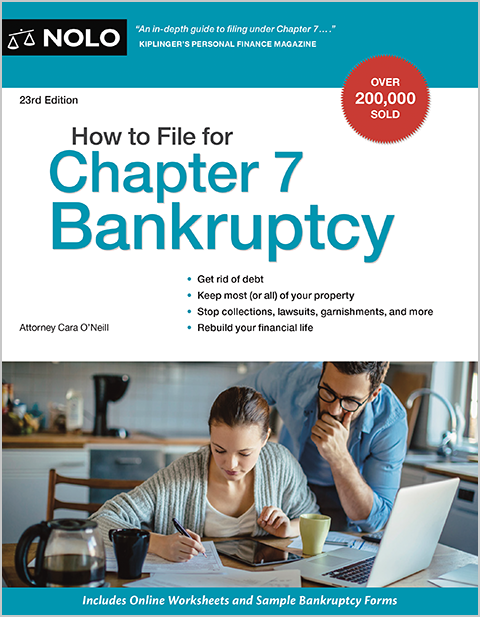
Book & eBook
How to File for Chapter 7 Bankruptcy
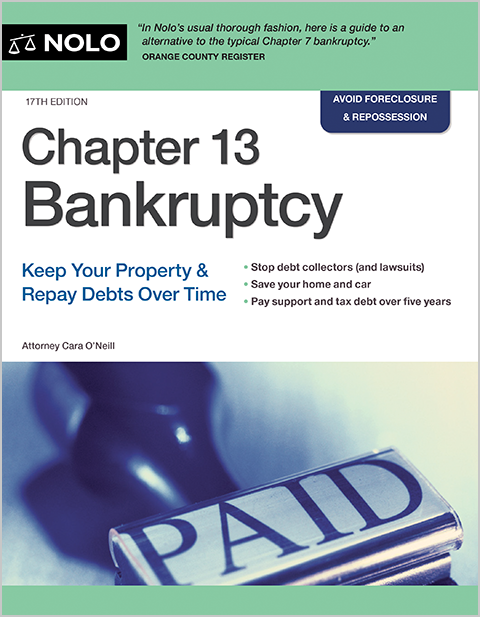
Book & eBook
Chapter 13 Bankruptcy

Copyright ©2025 MH Sub I, LLC dba Nolo ® Self-help services may not be permitted in all states. The information provided on this site is not legal advice, does not constitute a lawyer referral service, and no attorney-client or confidential relationship is or will be formed by use of the site. The attorney listings on this site are paid attorney advertising. In some states, the information on this website may be considered a lawyer referral service. Please reference the Terms of Use and the Supplemental Terms for specific information related to your state. Your use of this website constitutes acceptance of the Terms of Use, Supplemental Terms, Privacy Policy, Cookie Policy, and Consumer Health Data Notice.
Your Privacy Choices