A step‑by‑step California bankruptcy guide covering eligibility, updated means‑test figures, and a 703 vs. 704 exemption guide for protecting essential property.
Updated 11/20/2025
Why Trust Us?
Fact-Checked
Nolo was born in 1971 as a publisher of self-help legal books. Guided by the motto “law for all,” our attorney authors and editors have been explaining the law to everyday people ever since. Learn more about our history and our editorial standards.
Each article that we publish has been written or reviewed by one of our editors, who together have over 100 years of experience practicing law. We strive to keep our information current as laws change. Learn more about our editorial standards.
Bankruptcy in California provides a way to eliminate debts and protect assets by using exemption laws. Chapter 7 offers fast debt relief if you qualify, while Chapter 13 helps protect assets and catch up on missed payments through a repayment plan.
This comprehensive guide will help you get started by answering common questions and explaining California's exemptions, eligibility requirements, and the step-by-step process. You'll learn what property is protected, how the means test affects eligibility, and what paperwork and deadlines to expect in California bankruptcy courts.
In This Article
- California Bankruptcy Eligibility Requirements 2025
- How to File for Bankruptcy in California
- Chapter 7 Bankruptcy in California: Quick Debt Relief
- Chapter 13 Bankruptcy in California: Repayment Plans to Keep Your Home
- California Bankruptcy Exemptions (703 vs. 704)
- Filing for Bankruptcy in California: 6-Step Process
- California Bankruptcy FAQs 2025
- How Bankruptcy Impacts Your Credit and Financial Future
- Need More Help With a California Bankruptcy?
California Bankruptcy Eligibility Requirements 2025
Economic changes are making it increasingly difficult for American families to weather job losses, illnesses, and other emergencies, leading to a rise in bankruptcy filings nationwide. If you're one of the many households struggling financially, there's a way out. Filing for bankruptcy in California can provide a structured, lawful way to rebuild your finances and get you back on your feet.
How to File for Bankruptcy in California
To get you started, you'll find the key differences between Chapter 7 and Chapter 13 in California in the table below. You might want to refer to it while learning about the different aspects of bankruptcy and deciding which chapter best fits your goals.
| Chapter 7 "Liquidation" Bankruptcy | Chapter 13 "Repayment Plan" Bankruptcy | Citations | |
|
Duration to Discharge |
Three to six months. | Three to five years. | 11 U.S.C. § 727(a); § 1322(d) |
|
Filing Fee |
$338 | $313 | 28 U.S.C. § 1930; as of October 2025 (subject to change) |
|
Potential Property Loss |
Yes. Nonexempt assets are sold for creditors. | No. Filers pay the value of nonexempt assets through the plan and keep the property. | 11 U.S.C. § 541, § 726, § 1322(b)(2) |
|
Means Test Required |
Yes. Income can't exceed limits; filers must not have disposable income to repay debts. |
No. However, filers must earn enough to pay the required Chapter 13 plan amount. | 11 U.S.C. § 707(b); § 1325(b) |
|
Debt Limits |
None | Unsecured $526,700; secured $1,580,125. |
11 U.S.C. § 109(e); April 1, 2025 - March 31, 2028 |
|
Best For |
Lower income, limited assets. |
Regular income, want to avoid property loss. |
11 U.S.C. § 101(10A); § 109(e) |
|
Biggest Benefits |
Erases most debts quickly without requiring repayment. |
Saves homes and cars by catching up on payments over time; can pay to keep property that would be lost in Chapter 7; can repay nondischargeable debts over time. |
11 U.S.C. § 362 (automatic stay) |
|
Main Downsides |
Property not covered by exemptions is lost. |
The repayment plan requires payment of all disposable income to creditors for years, with court oversight. Payment isn't always affordable. |
11 U.S.C. § 727(a); § 1307 |
|
Mortgage and Car Payments |
No catch-up for missed payments, risk of property loss to the lender. | Can catch up on missed payments in the plan and keep a house, car, or other property serving as collateral. | 11 U.S.C. § 1322(b)(5) |
|
Nondischargeable Debts |
Debts that aren't eliminated include child support, many taxes, and student loans. Debt will remain after bankruptcy. |
Nondischargeable debts are repaid in the plan. | 11 U.S.C. § 523(a) |
|
Previous Filings |
Eight years after a prior Ch. 7; six after Ch. 13. |
Four years after Ch. 7; two years after Ch. 13. |
11 U.S.C. § 727(a)(8); § 1328(f) |
Chapter 7 Bankruptcy in California: Quick Debt Relief
If your primary goal is to erase debt fast, Chapter 7 is the best option. It eliminates many debts, such as credit cards and medical bills, typically within a few months. However, you could lose property exceeding California's exemption limits because the Chapter 7 trustee can sell that property to repay creditors.
Who Qualifies for Chapter 7 Bankruptcy in California
Whether you'll qualify will depend on whether your income falls below or above your state's median income. The U.S. Trustee Program "Means Testing" page has current amounts.
Qualifying With Below-Median Income
If your gross yearly family income is below California's median income for your family size, you qualify. For a filing between November 1, 2025 and May 14, 2026, you would be eligible at or below the following limits:
- $77,221 for a one-person household
- $100,161 for a two-person household
- $113,553 for a three-person household, and
- $135,505 for a four-person household.
Add $11,100 per individual over 4.
Qualifying With Above-Median Income
If your gross family income is higher than the median, an additional "means test" calculation is necessary to determine your eligibility. This test lets you subtract expenses from your income and determines whether you have anything left to pay creditors.
Take the bankruptcy eligibility quiz. Find out about particular issues and whether you qualify by taking the Chapter 7 bankruptcy quiz.
Chapter 13 Bankruptcy in California: Repayment Plans to Keep Your Home
Chapter 13 creates a repayment plan lasting three to five years. Most people pay a minimal amount toward debts they can discharge (erase).
Chapter 13 vs. Chapter 7 Bankruptcy in California
Chapter 13 can help prevent foreclosure or repossession, allowing filers to keep assets like homes and cars while catching up on missed mortgage or vehicle payments. Because Chapter 7 doesn't have a repayment plan, filers risk losing their homes or vehicles if they file when they're behind.
Chapter 13 Income Requirements and Eligibility in California
A fundamental requirement for Chapter 13 is having a regular income source to fund your repayment plan. Also, your total debt must fall within specific limits, which are updated periodically (check the chart above for current amounts).
Try the payment calculator. Estimate your Chapter 13 repayment plan in minutes using the Chapter 13 payment calculator.
California Bankruptcy Exemptions (703 vs. 704)
You keep assets protected by specific California bankruptcy exemptions. In Chapter 7, nonexempt property is sold for the creditors. In Chapter 13, you can keep nonexempt property by paying its value in your repayment plan.
You can choose between two separate California exemption schemes, § 703 exemptions or § 704, but you must choose one system. You can't mix and match exemptions between systems.
California 703 and 704 State Exemptions Table
|
Exemption |
703 Exemptions | 704 Exemptions |
|---|---|---|
|
Homestead Residential Property or Wildcard |
|
|
| Motor Vehicles |
|
|
| Personal Property |
|
|
| Trade Implements |
|
|
| Alimony, Support, Separate Maintenance |
|
|
| Claims for Negligence or Tortious Conduct | — |
|
|
Crime Victims' Compensation |
|
— |
|
Insurance Benefits |
|
|
|
Pensions & Retirement Benefits |
|
|
|
Public Assistance |
— |
|
|
Wages |
|
|
|
Unemployment Compensation |
|
|
|
Workers' Compensation |
— |
|
|
Fraternal Benefit Society Benefits |
— |
|
| Building Materials | — |
|
| Cemeteries and Burial Funds | — |
|
| Prisoners' Property | — |
|
| Partnership Property | — |
|
| Trusts, Escrow, and Deposit Accounts | — |
|
|
Miscellaneous Benefits |
— |
|
Filing for Bankruptcy in California: 6-Step Process
When you first file, both the Chapter 13 and Chapter 7 processes are similar.
Complete Credit Counseling
Complete a U.S. Trustee-approved credit counseling course within 180 days before filing. Also, make sure you are prepared to file for bankruptcy by securing housing and transportation, and by having a bank account in good standing.
Assemble Financial Documents
Gather all financial documents you'll need to complete and file the bankruptcy forms, including pay stubs, tax returns, bank statements, and debt lists.
File in the Correct California District
File your forms with the appropriate California bankruptcy court. On the website, you'll find instructions for filing your paperwork, local rules, and more. Fees can be waived or paid in installments.
File your forms with the proper federal bankruptcy court, depending on where you live. California has four bankruptcy courts with multiple locations serving different geographical areas.
- Eastern District. Sacramento, Fresno, Modesto, and Bakersfield.
- Northern District. Oakland, San Jose, Santa Rosa, and San Francisco.
- Central District. Los Angeles, Riverside, Santa Ana, Santa Barbara, and the San Fernando Valley
- Southern District. San Diego, California 92101
Once you file, the automatic stay will go into effect. Almost all collection efforts, lawsuits, garnishments, and foreclosures stop when you file.
Attend the 341 Meeting of Creditors
Attend this mandatory court-supervised session. After the 341 meeting, all filers complete the second required U.S. Trustee-approved course, debtor education. Chapter 13 filers must also attend a plan confirmation (approval) hearing and complete the repayment plan.
Receive the Discharge
After fulfilling requirements, the court issues a discharge order that erases eligible debts.
After Filing for Bankruptcy in California
After discharge, you'll want to maintain financial stability by reviewing your credit report and rebuilding credit. Maintaining emergency savings is another good way to avoid another bankruptcy.
Learn more details about whether it's better to file for Chapter 7 or 13.
California Bankruptcy FAQs 2025
- Can I keep my car if I file for bankruptcy in California?
- Will I lose my house in bankruptcy in California?
- Can I file bankruptcy again if I've filed before?
- How much does bankruptcy cost?
- How long does bankruptcy stay on my credit report?
- How long does Chapter 7 take in California?
- Can I file bankruptcy without a lawyer in California?
- What debts can't be discharged in a California bankruptcy?
Can I keep my car if I file for bankruptcy in California?
You can keep a vehicle if your equity is within the exemption limit. If it's financed, you must be and stay current on payments in Chapter 7. You can catch up on missed payments and keep your car in Chapter 13.
Will I lose my house in bankruptcy in California?
As long as your home equity is exempt and you stay current on payments, you should be able to keep your house in Chapter 7. If you're behind on payments, Chapter 13 allows you to catch up and keep your home. Learn which chapter to file to keep your house.
Can I file bankruptcy again if I've filed before?
Yes, but bankruptcy waiting periods apply. You must wait eight years between Chapter 7 filings. The time is reduced to six years if you choose to file for Chapter 13 after filing for Chapter 7.
How much does bankruptcy cost?
You'll pay filing fees, counseling and debtor education course fees, as well as attorney costs, which vary according to the bankruptcy chapter and case complexity. A Chapter 7 case typically costs between $1,800 and $3,500. You'll likely pay $3,500 to $5,000 for Chapter 13. Chapter 7 costs must be paid in full before filing. However, legal fees can be included in the Chapter 13 plan.
How long does bankruptcy stay on my credit report?
Chapter 7 remains on your credit report for up to 10 years. Chapter 13 stays on your credit report for seven years. However, the impact diminishes over time, and many people see credit improvement within a year or two.
How long does Chapter 7 take in California?
Chapter 7 typically takes three to five months to complete. While you'll receive your discharge within that time, the case could remain open longer if the trustee needs to sell property or resolve litigation.
Can I file bankruptcy without a lawyer in California?
Many people can file for bankruptcy without a lawyer if they're willing to do the proper research. Simple Chapter 7 cases tend to be the most successful—those with dischargeable debts and minimal assets. Bankruptcy courts advise against filing a Chapter 13 without a lawyer because Chapter 13 cases are complicated and rarely successful without a lawyer's help.
What debts can't be discharged in a California bankruptcy
You won't be able to eliminate support obligations and most taxes. Student loans can be eliminated, but you must file a bankruptcy lawsuit and prove that paying the loans would be an "undue hardship." Learn more about nondischargeable debts in bankruptcy.
How Bankruptcy Impacts Your Credit and Financial Future
Bankruptcy provides a financial reset, offering a fresh start. Most filers can work to improve their credit within a couple of years. It's even possible to qualify for a mortgage two to four years after discharge.
Rebuilding Your Credit
- Secured credit cards. Build positive payment history.
- Credit monitoring. Track your progress and dispute errors.
- Responsible borrowing. Keep credit utilization low.
Timeline for Credit Recovery
- Six months. Credit scores begin stabilizing, and you might receive credit card offers.
- One to two years. Renting an apartment and opening bank accounts should become easier.
- Two to four years. Interest rates should begin to improve. You might qualify for a mortgage.
- Seven to ten years. Bankruptcy is removed from credit reports.
Need More Help With a California Bankruptcy?
If you don't have the funds for legal help, there's hope. Consider reading our guide that explains what to do when you can't afford a bankruptcy lawyer. You'll learn about the many creative ways to finance a bankruptcy filing.
Did you know Nolo has made the law accessible for over fifty years? It's true, and we wholeheartedly encourage research and learning. However, online articles and resources can't address all bankruptcy issues and aren't written with the facts of your particular case in mind. The best way to protect your assets in bankruptcy is by hiring a local bankruptcy lawyer.
In This Article
- California Bankruptcy Eligibility Requirements 2025
- How to File for Bankruptcy in California
- Chapter 7 Bankruptcy in California: Quick Debt Relief
- Chapter 13 Bankruptcy in California: Repayment Plans to Keep Your Home
- California Bankruptcy Exemptions (703 vs. 704)
- Filing for Bankruptcy in California: 6-Step Process
- California Bankruptcy FAQs 2025
- How Bankruptcy Impacts Your Credit and Financial Future
- Need More Help With a California Bankruptcy?
DIY Legal Tools from Nolo
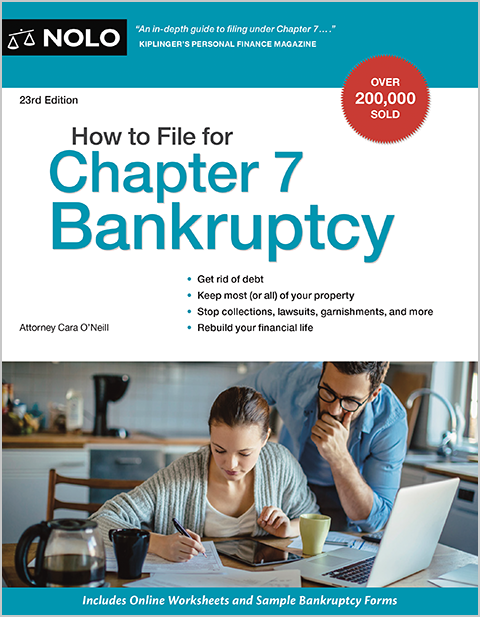
Book & eBook
How to File for Chapter 7 Bankruptcy
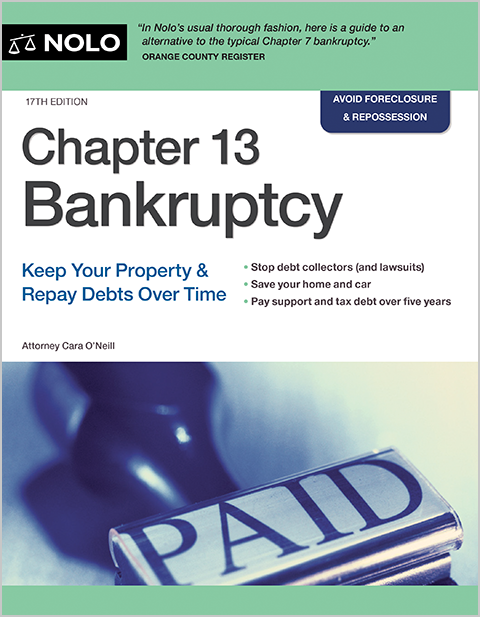
Book & eBook
Chapter 13 Bankruptcy

Copyright ©2025 MH Sub I, LLC dba Nolo ® Self-help services may not be permitted in all states. The information provided on this site is not legal advice, does not constitute a lawyer referral service, and no attorney-client or confidential relationship is or will be formed by use of the site. The attorney listings on this site are paid attorney advertising. In some states, the information on this website may be considered a lawyer referral service. Please reference the Terms of Use and the Supplemental Terms for specific information related to your state. Your use of this website constitutes acceptance of the Terms of Use, Supplemental Terms, Privacy Policy, Cookie Policy, and Consumer Health Data Notice.
Your Privacy Choices