
 Rules of Evidence
Trials are about getting to the truth. But there are precise rules lawyers must follow in trying to get there. Learn what kind of evidence is—and isn’t—admissible in criminal trials.
Understanding how relevance determines admissibility is key to grasping trial evidence rules. Not all relevant evidence makes it before a jury.
Opening statements can sound dramatic, but they're not evidence. Learn when they happen, what each side is allowed to say, and how judges handle improper comments.
Closing arguments tie together evidence and legal principles, guiding jurors through complexities of a criminal case. Learn how attorneys craft, deliver, and defend their final words in a criminal trial and the consequences of a misstep.
Understand how cross-examination works, the rules of the courtroom, and how to stay calm and confident during questioning.
Evidence doesn't automatically make it into court. Learn how the chain of custody works, why it's important, what challenges can be made, and what happens when there's a break in the chain.
Charged with a crime and wondering if friends or family can vouch for you? This article explains what character evidence is, when you can use it, how prosecutors can hit back, and why the mercy rule can sometimes hurt more than it helps.
Are you thinking about testifying in your trial? Discover how your past convictions may be used by prosecutors and how judges decide which convictions are admissible and which are not.
What protects sexual assault victims from intrusive and embarrassing questions about their sexual histories in court? Discover the purpose, function, and limits of rape shield laws.
When they're depicted on television, prosecutors and other lawyers are often aggressive and seem to make statements to, rather than ask questions of, witnesses. Is this how it goes in a real courtroom?
Explains how redirect and re-cross let attorneys clean up confusion, address new information, or repair any damage to a witness’s credibility.
Psychotherapy is, for the most part, confidential. Patients of mental health providers like psychiatrists, psychologists, and social workers reasonably expect that their in-therapy disclosures will remain private.
Empower Yourself: DIY Products by Nolo
Sidestep the lawyers with do-it-yourself books, documents, and software.
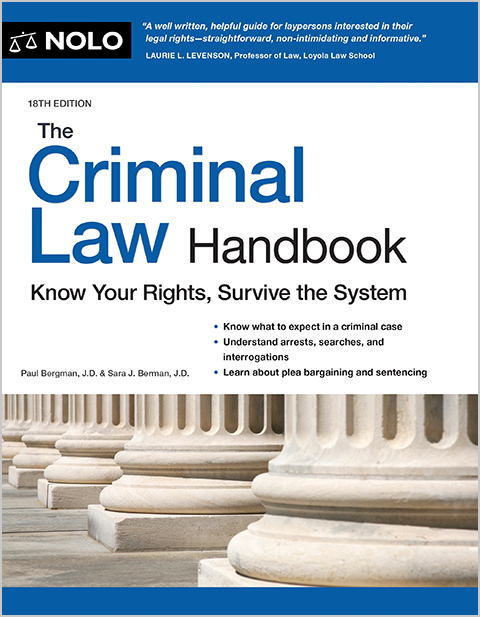
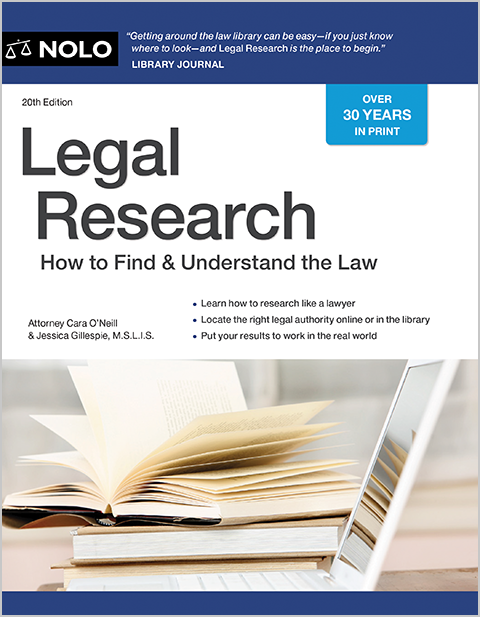
Book
Legal Research
Nolo offers hundreds of consumer-friendly, do-it-yourself legal products for all types of legal situations. Browse our full product list.
More Legal Issues
Click below to view more legal issues. Our extensive collection of legal topics ranges across different areas of practice.

Corporations Car Accidents Criminal Law Debt Management Disability Law Divorce & Family Law

Learn About Our Team
Our editors have over 100 years of combined experience practicing law. These professionals have worked in a wide range of legal areas, from estate planning to criminal law to business formation and beyond. They’re experts at explaining complicated legal issues in easy-to-understand terms.
Learn more about the team that manages Nolo’s articles, books, and DIY tools.
Need a Lawyer? We Can Help
Find an experienced, local attorney in three easy steps. Our process is designed for ease and simplicity.
Describe Your Case
Briefly tell us about your case, and provide your contact information.
Get Connected
We find and instantly list attorneys that can best handle your case.
Hire an Attorney
Choose the attorneys you would like to work with.
Nolo Legal Dictionary
Find plain-English definitions for legal terms by browsing Nolo's Law Dictionary.
Are You an Attorney?
Grow your firm with Martindale-Nolo, the largest legal network, and learn more about our attorney lead-generation and marketing services.
Integrity and Expertise You Can Rely On
At Nolo, we prioritize quality and transparency because we know how important reliable legal information is to our readers. Our information is meticulously researched, regularly updated, and written in plain English by our experienced writers and editors. Learn more about our editorial standards.
Copyright ©2025 MH Sub I, LLC dba Nolo ® Self-help services may not be permitted in all states. The information provided on this site is not legal advice, does not constitute a lawyer referral service, and no attorney-client or confidential relationship is or will be formed by use of the site. The attorney listings on this site are paid attorney advertising. In some states, the information on this website may be considered a lawyer referral service. Please reference the Terms of Use and the Supplemental Terms for specific information related to your state. Your use of this website constitutes acceptance of the Terms of Use, Supplemental Terms, Privacy Policy, Cookie Policy, and Consumer Health Data Notice.
Your Privacy Choices