When workers' compensation might cover your car accident injuries, and the key differences between workers' comp and car accident claims.
Updated 11/19/2025
Why Trust Us?
Fact-Checked
Nolo was born in 1971 as a publisher of self-help legal books. Guided by the motto “law for all,” our attorney authors and editors have been explaining the law to everyday people ever since. Learn more about our history and our editorial standards.
Each article that we publish has been written or reviewed by one of our editors, who together have over 100 years of experience practicing law. We strive to keep our information current as laws change. Learn more about our editorial standards.
If you're injured in a car accident while working, you might be able to file a workers' compensation claim with your employer over the incident. But cases like these can be complicated by several factors, including whether you were really engaged in a work-related activity at the time of the crash, and whether you're classified as an employee or an independent contractor.
In this article, we'll focus on the legal intersection between workers' compensation claims and car accidents.
In This Article
- What Is a "Work-Related" Car Accident?
- When Is a Car Accident Linked to a "Job-Related Purpose"?
- Auto Accident Claims Versus Workers' Compensation Claims
- If You're Found At Fault for the Car Accident
- Can I Bring Both a Workers' Compensation Claim and a Car Accident Claim?
- Does Workers' Compensation Cover Car Damage?
- Getting a Lawyer's Help
What Is a "Work-Related" Car Accident?
The rules for workers' compensation claims differ from state to state. However, all states require that an injury be "work-related" (or otherwise tied to a job-related purpose) in order for an employee to receive workers' compensation benefits.
Generally, if you are injured at your place of work, your injury will be considered work-related (although there are exceptions to that rule). If you are in a car accident while driving or riding in a car for work-related reasons away from your workplace, and even if you primarily work from home, you might also be covered by workers' compensation. The determination of whether or not an injury is sufficiently work-related for workers' compensation purposes is very fact-dependent.
When Is a Car Accident Linked to a "Job-Related Purpose"?
The list of possibilities can't be captured here, but in general you might be considered "on the job" if you're involved in a car accident while:
- you are running an errand for your boss or employer
- you are making work-related deliveries
- you are transporting another employee or a client
- you are driving for a living (note that you need to be an employee, not an independent contractor in order to receive workers' comp benefits)
- traveling for work (and you are paid by your employer for your travel time to or from home).
Can I Get Workers' Compensation If I'm in a Car Accident on My Commute?
Generally speaking, you're not able to collect workers' compensation benefits for a car accident that occurred while you were simply commuting to or from work. However, there are exceptions to this rule. For example, if you stopped while on the way to work to pick up supplies for the office, and then were involved in a car accident, you might be eligible for workers' compensation benefits.
With work-life boundaries evaporating, and an influx of work-from-home and hybrid work arrangements, the line between what's job-related and what isn't will only continue to blur. Learn more about the kinds of injuries and illnesses that are covered by workers' compensation.
Auto Accident Claims Versus Workers' Compensation Claims
In addition to potential eligibility for workers' compensation benefits, if another driver caused your car accident, you may have the right to bring a personal injury claim against that driver, and get compensation for your medical bills and other losses stemming from your car accident injuries. That could mean filing a third-party insurance claim directly with the at-fault driver's insurance carrier, or filing a personal injury lawsuit. There are big differences between a personal injury claim and a workers' compensation claim.
First, a covered employee files a workers' compensation claim according to the procedures laid out under state law. Usually that means the employer files initial paperwork with the state agency, or the employee starts a claim with the state's workers compensation agency or appeals board. A personal injury lawsuit, on the other hand, is filed in the local branch of the state's civil court system.
Categories of "Damages" Are Limited in Workers' Comp
Perhaps the most significant difference between a workers' compensation claim and a personal injury claim is the variety of damages that can be recovered. In a workers' compensation claim, you generally receive payments only for certain quantifiable losses (medical bills and lost income), usually up to certain maximums. You will not receive payment for pain and suffering in a workers' compensation claim, but those kinds of damages are always available in a personal injury lawsuit.
Much Shorter Deadlines for Filing a Workers' Comp Claim
Another big difference between personal injury and workers' comp claims has to do with timing. Typically, if you are injured on the job, you must notify your employer "immediately," or at least within a certain number of days (30, 90, etc., depending on the state). You typically have a much larger window within which to file an actual workers' comp claim (usually one to three years). With a personal injury lawsuit, the only time limit comes from the statute of limitations filing deadline, which varies from state to state, but is never shorter than one year from the date of the underlying accident, and is usually two or three years.
If You're Found At Fault for the Car Accident
A final big difference between a workers' compensation claim and a personal injury claim is "fault." When you bring a personal injury claim against the other driver, you must prove that the other driver caused the car accident.
In a workers' compensation claim, you do not need to prove anyone else caused the crash. You can usually even collect workers' compensation benefits even if the car accident was your fault, as long as you were driving for a work-related purpose, and you weren't under the influence of drugs or alcohol.
Can I Bring Both a Workers' Compensation Claim and a Car Accident Claim?
The intersection between the workers' compensation system and personal injury claims can be very confusing. You don't typically have to choose between filing a workers' compensation claim and filing a personal injury claim. Even if you accept workers' compensation benefits from your employer, you still have the right to seek damages from the driver who caused the car accident.
However, if you receive workers' compensation benefits, your employer or its insurance company may have a "lien" against any compensation you receive from any third party. For example, if you receive $10,000 in workers' compensation benefits from your employer, and you later reach a car accident settlement agreement for $20,000 against the other driver, your employer may have a $10,000 lien on your settlement.
Does Workers' Compensation Cover Car Damage?
In a word, no. Even if you clearly establish that your car accident happened while you were engaged in a work-related activity, and you start the workers' compensation claim process with no hiccups, only your car accident injuries will be covered, not your vehicle damage.
Note that while workers' compensation benefits won't help you get your car fixed after a crash, you always have the option of filing a car insurance claim against the at-fault driver's property damage liability coverage, or making a claim under your own collision coverage.
Getting a Lawyer's Help
Especially if you've been seriously injured in a car accident, figuring out how to best proceed (via personal injury or workers' compensation) might be better left to a legal expert. But since claim filing deadlines can limit your options, it's important to discuss your situation with an attorney sooner rather than later. Learn more about how an attorney can help with your car accident case and when you need a workers' compensation lawyer.
In This Article
- What Is a "Work-Related" Car Accident?
- When Is a Car Accident Linked to a "Job-Related Purpose"?
- Auto Accident Claims Versus Workers' Compensation Claims
- If You're Found At Fault for the Car Accident
- Can I Bring Both a Workers' Compensation Claim and a Car Accident Claim?
- Does Workers' Compensation Cover Car Damage?
- Getting a Lawyer's Help
DIY Legal Tools from Nolo
Book & eBook
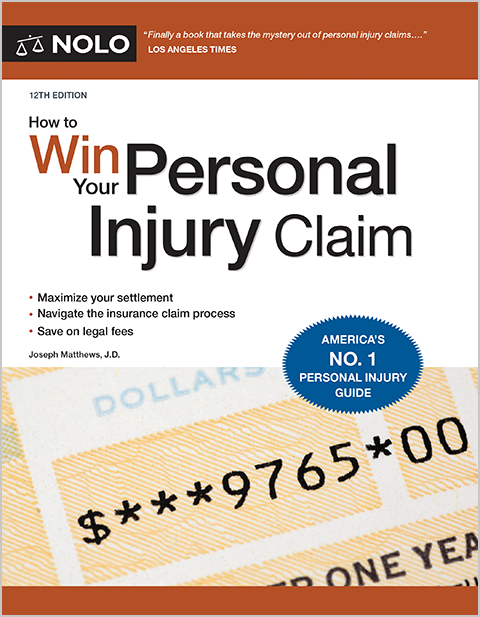
How to Win Your Personal Injury Claim
Book & eBook
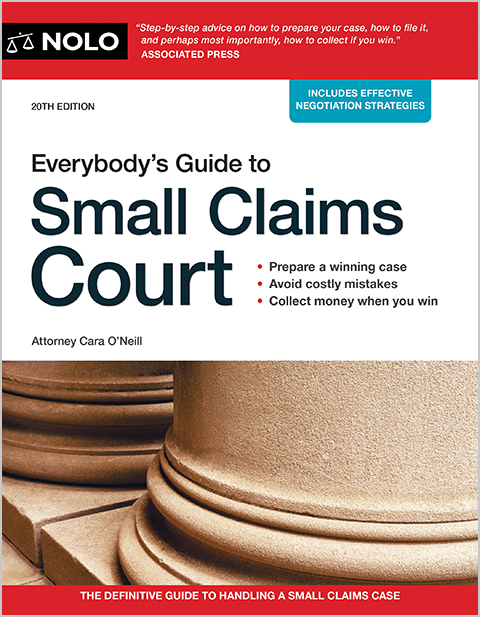
Everybody's Guide to Small Claims Court

Copyright ©2025 MH Sub I, LLC dba Nolo ® Self-help services may not be permitted in all states. The information provided on this site is not legal advice, does not constitute a lawyer referral service, and no attorney-client or confidential relationship is or will be formed by use of the site. The attorney listings on this site are paid attorney advertising. In some states, the information on this website may be considered a lawyer referral service. Please reference the Terms of Use and the Supplemental Terms for specific information related to your state. Your use of this website constitutes acceptance of the Terms of Use, Supplemental Terms, Privacy Policy, Cookie Policy, and Consumer Health Data Notice.
Your Privacy Choices